
Many bemoan the destruction of old grand termini such as the Berlin Anhalter Bahnhof, London’s Euston station, and Paris’s old Gare Montparnasse. But often, there can be good reasons to renew of reject such heavily used urban structures after they’ve lost their practical usefulness. What pains me more is how casually and often unnecessarily smaller-scale railway architecture is done away with.
José Ângelo Cottinelli Telmo (1897-1948) was a leading railway architect in Portugal during the first half of the 20th century, and as such he was responsible for designing the suburban Praça do Quebedo station, just south of Setúbal’s main station in Portugal, on the then line to Alcácer do Sal. 1
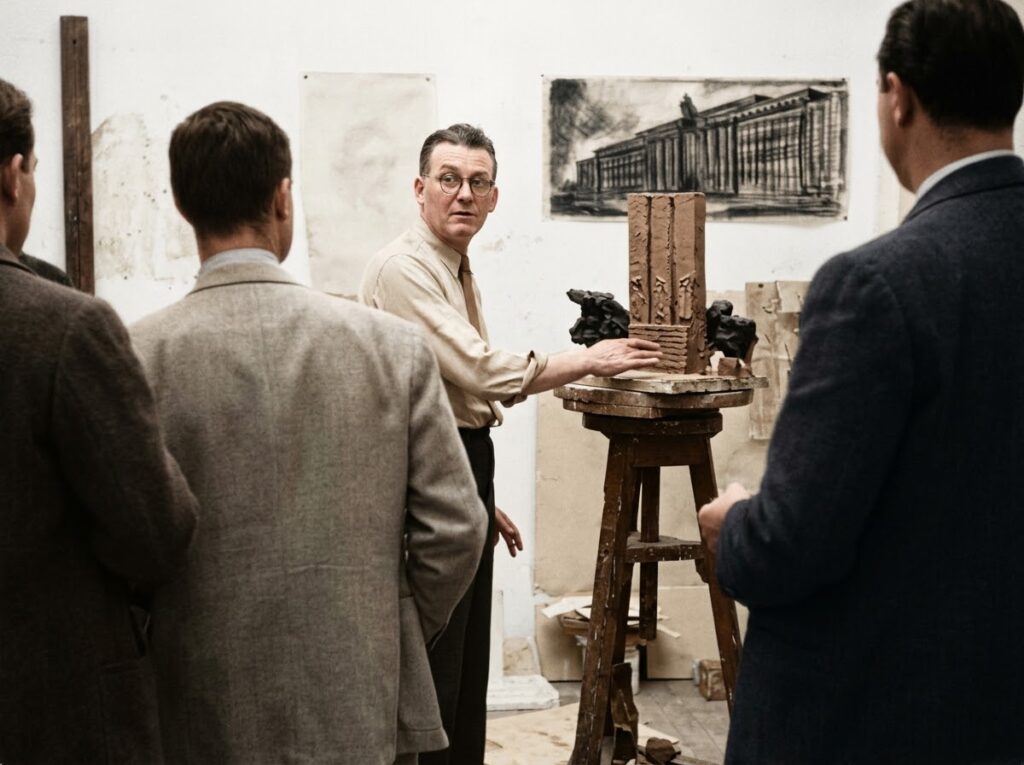
In addition to the Praça do Quebedo station, Cottinelli designed many other railway buildings, but he made his name with more prestigious architecture in service of the state, such as the Cidade Universitária at Coimbra and the Padrão dos Descobrimentos (Monument of the Discoveries) next to Belém Tower, near Lisbon, originally part of the Exposição do Mundo Português of 1940. The main blot on his reputation must be the Tarrafal penal colony (=concentration camp) on Cabo Verde, for which he created the initial design. And while one may claim that he shouldn’t be held responsible for the atrocities committed in this “slow death camp” for political prisoners (the authorities tried to hide the camp’s purpose from outsiders) there’s also no indication that Cottinelli didn’t fully support the Estado Novo regime.
Cottinelli didn’t restrict himself to architecture, though; among many other things, he was also the director of the first sound feature film fully produced in Portugal, A canção de Lisboa (1933; the second Portuguese talkie overall).
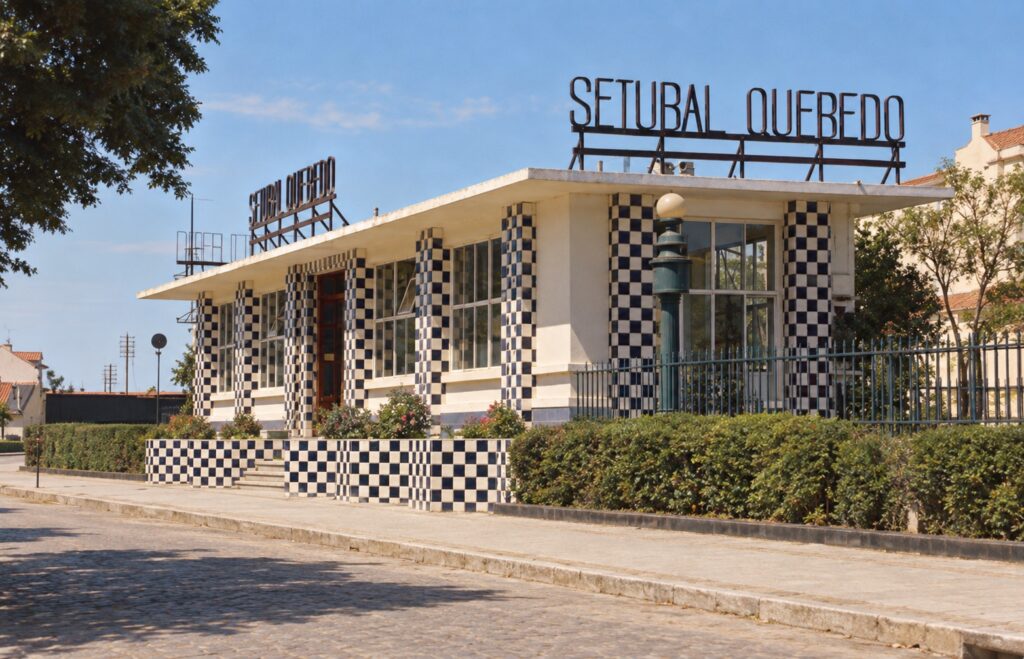
After the Praça do Quebedo stop on the line from Setúbal to Alcácer do Sal had originally being opened with a small wooden shed in 1920, Cottinelli Telmo’s building was inaugurated in September of 1935. It is an exquisite example a type of art deco inspired architecture known as Português Suave, and rather more open and airy than was typically the case. It was only a small stop, of course, on a single-track line. But it was well-used, being much closer to the old city center and quayside then the city’s main station.
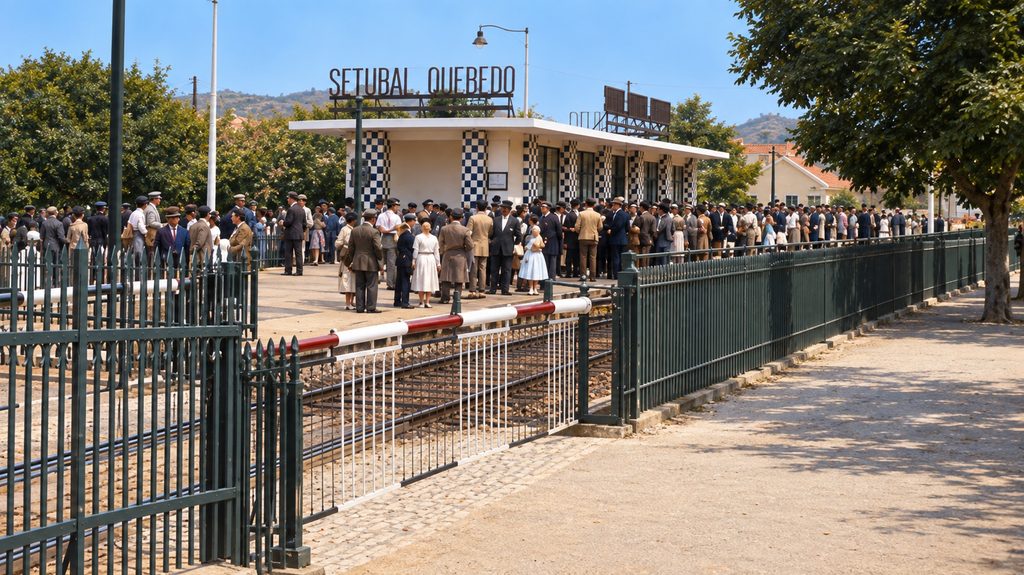
That line, however, was being used intensively both for passenger and freight traffic. The level crossing became an infamous traffic bottleneck for car traffic from Lisbon towards the Alentejo and further south, since the A2/A12 motorway ended more or less dumped its entire traffic there.2
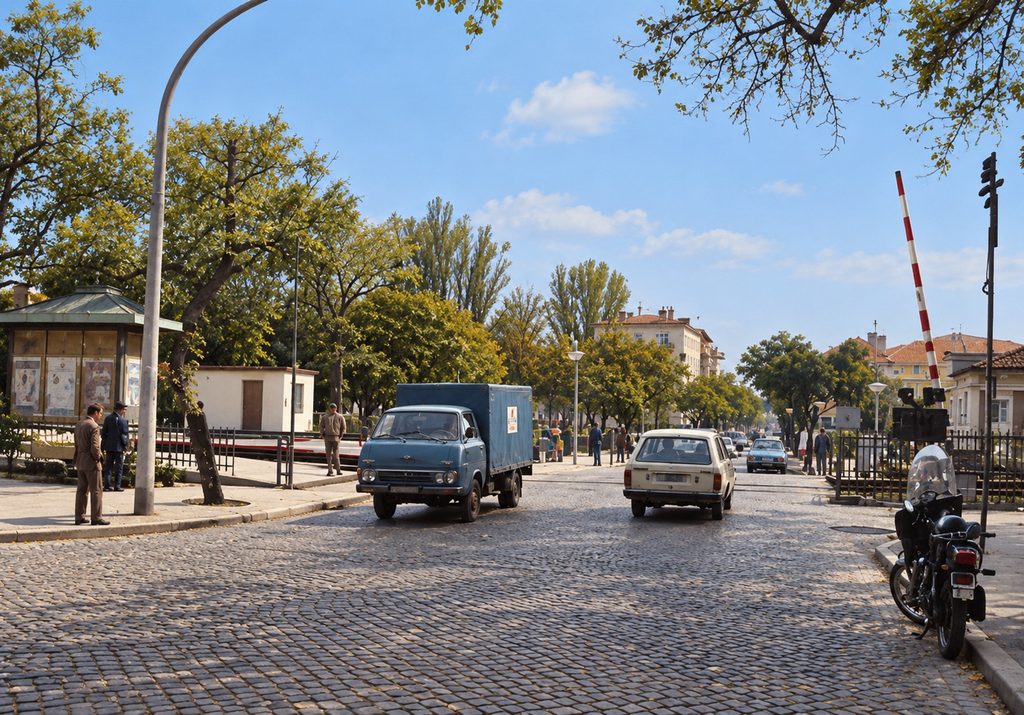
The removal of the level crossing proved to be the undoing of Cottinelli’s charming little station. By now suffering from a long-standing lack of maintenance and damage due to the vibrations on the heavily used (both by cargo and passenger trains) single-track line,3 the structure was torn down in the mid-1990s and replaced by a new one, together with the construction of a road tunnel. At the time, the perennially underfunded railway company CP seems to have had little attention for preserving its heritage (look up the old Barreiro station to see an even more egregious example), and EU infrastructure subsidy regulations didn’t much prioritize it either.
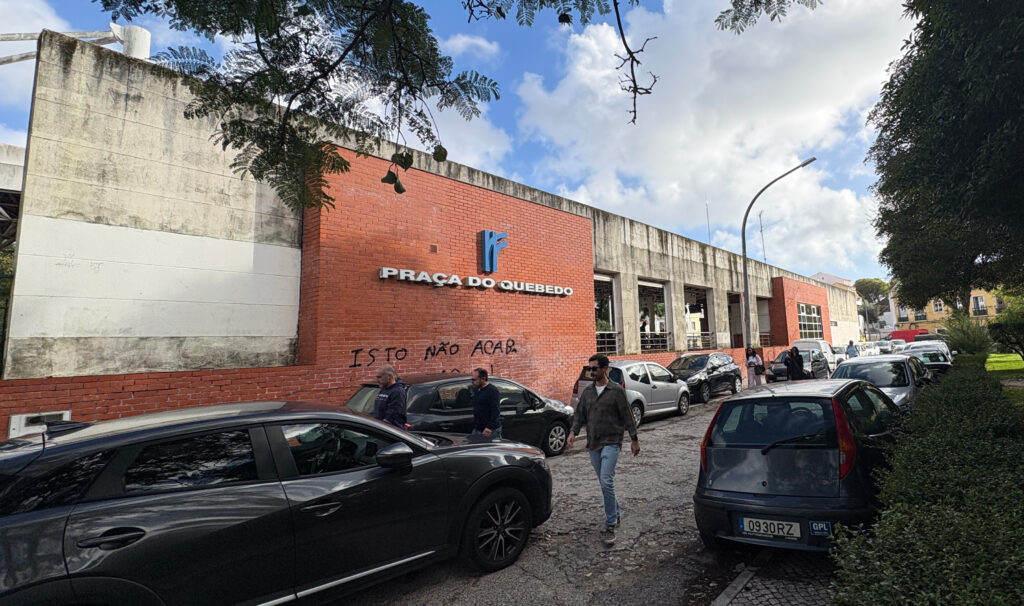
Although I’m aware that the current station doesn’t look great on the photo, it’s not horrible. It has a nice coffee bar, decent seating, and, as a single-track railway station, it really doesn’t need to do a lot. It’s my recurring commute station and in practice, it’s adequate. But still, that old structure looks so much more refined, and I still feel as though it could’ve been integrated into the new setup in some way, the way they did with Setúbal’s old railway station.
- It now terminates at Praias do Sado-A, next to the Setúbal Polytechnic campus[↩]
- Today, the A2 bypasses Setúbal entirely, but the section from Palmela to the Algarve was only built in the mid to late 1990s.[↩]
- This was told to me by locals, I’ve not been able to find any literature or an inspection report (relatório de estabilidade) on the subject.[↩]