
Abgefahren. Eine Geschichte der vergessenen Berliner Bahnhöfe (2026)
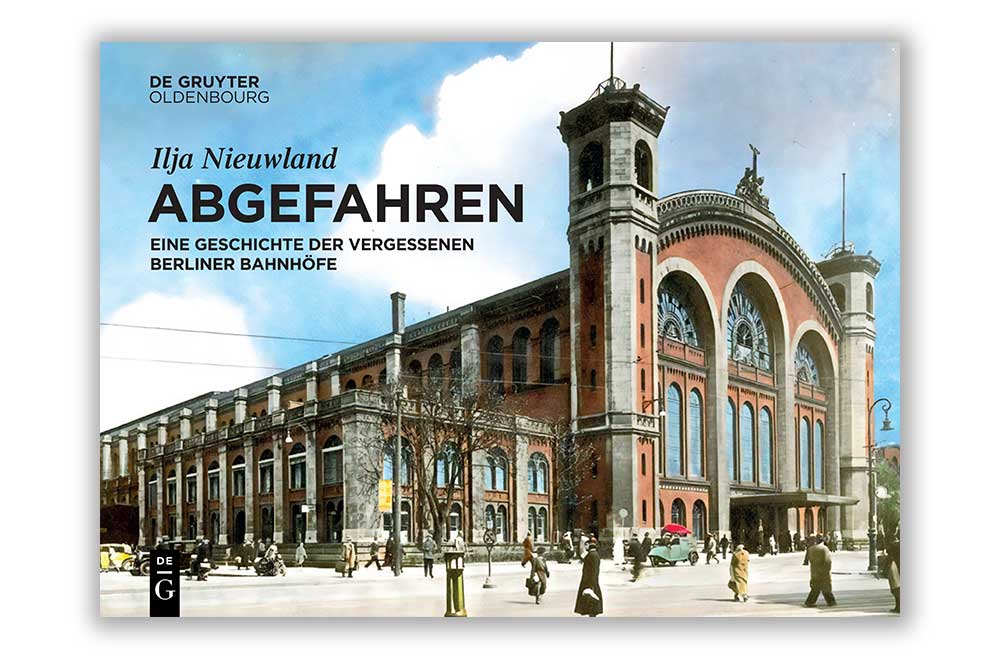
The German translation of my book The Lost Termini of Berlin (see below), but in an oblong format and with improved reconstructions.
Purchase this book directly through DeGruyterBrill.com or Amazon.
The Lost Termini of Berlin. A Biography of the Railway Stations that Shaped the German Capital (2025)
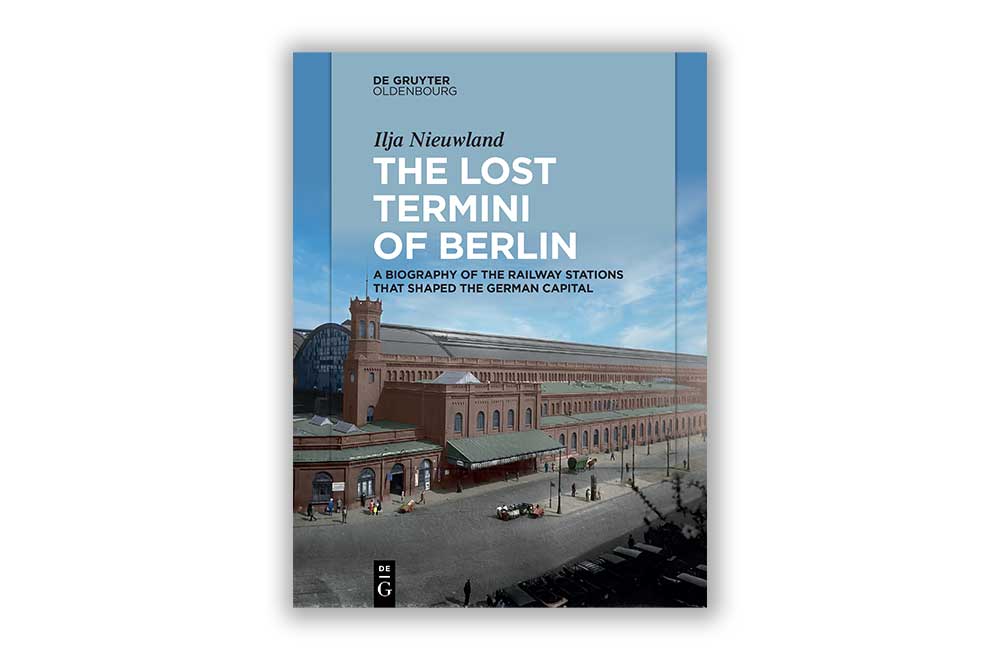
From the birth of Berlin’s railway network to the time when the bombs of the Second World War and the concrete slabs of the Wall changed the city forever, the Prussian and later German capital counted eight major railway stations. These were beacons in the city: impressive monuments, magnificently built for the bygone rituals of arrival and departure, yet tightly woven into a distinct part of town.
Railway stations are magical, meaningful places, allowing for escape as well as promise, nostalgia as well as novelty. They process all sorts of people, from well-to-do business types to unfortunates forced to live on the fringes of society. There is a nervous energy around them, created by those looking forward to their journey, others trying to get oriented in a place that is new to them, and some facing the drudgery of yet another commute.
“a must-read for anyone interested in urban history, architectural heritage, or the multi-layered complexity of Berlin itself. Whether you are a history buff, a railway enthusiast, or a reader drawn to the hidden stories of cities, this book provides an illuminating glimpse into an often-overlooked aspect of Berlin’s history– one no less fascinating than its more familiar narratives.” – Breno Borges in Journal of Transport History.
And if pre-World War 2 Berlin was anything, it was energetic. Building an adequate transport infrastructure for Europe’s fastest-growing city proved to be a continuous challenge that required flexibility and adaptation and touched the city in ways that can still be seen today. This is the history of Berlin’s railway stations, the people that used them, and the way the city was shaped by them.
Purchase this book directly at De Gruyter or via Amazon.
A German translation of this book is set to appear later this year.
Jaekelwelten (2023)
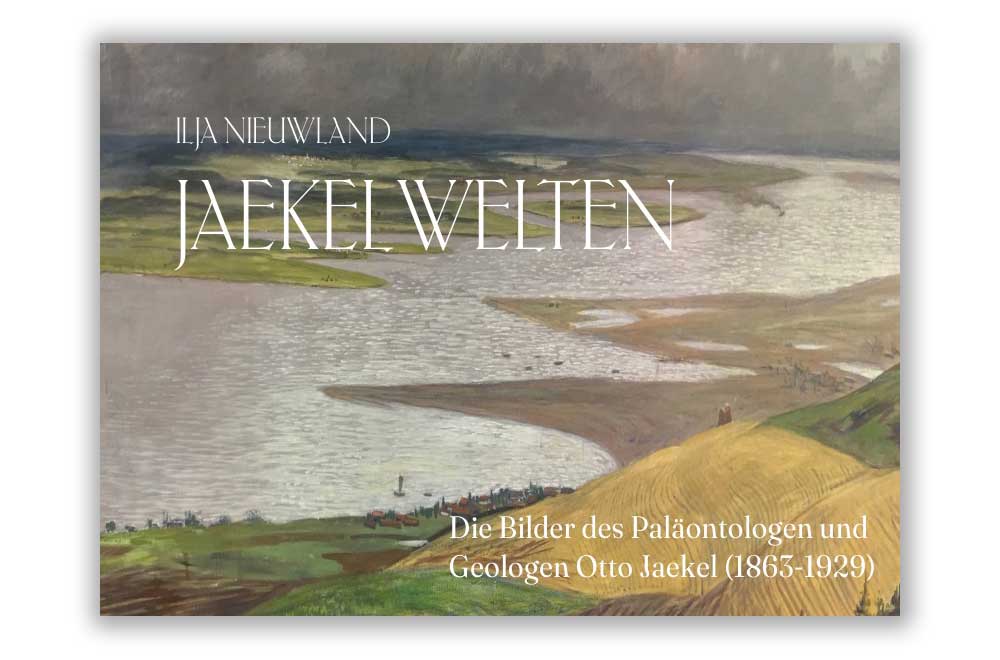
Jaekelwelten is a catalogue meant to accompany the eponymous exhibition that took place in Greifswald from June to October, 2023. Otto Jaekel was a paleontologist, geologist, artist, art collector and a bunch of other things, who worked in Greifswald from 1906 until 1928. During his entire life, he drew and painted everything and everyone around him; sometimes for his personal satisfaction, but also often to illustrate his work and teaching. The book gives information about Jaekel’s life, his art, and his art collection, and shows a large part of his surviving oeuvre.
Jaekelwelten is published in German, and can be bought through ePubli for €29,99 excl. postage. It can also be downloaded for free as a PDF file through this link (18MB).
An English-language version is scheduled to appear later this year.
American Dinosaur Abroad. A Cultural History of Carnegie’s Plaster Diplodocus (2019)
In early July 1899, an excavation team of paleontologists sponsored by Andrew Carnegie discovered the fossil remains in Wyoming of what was then the longest and largest dinosaur on record. Named after its benefactor, the Diplodocus carnegii—or Dippy, as it’s known today—was shipped to Pittsburgh and later mounted and unveiled at the Carnegie Museum of Natural History in 1907. Carnegie’s pursuit of dinosaurs in the American West and the ensuing dinomania of the late nineteenth century coincided with his broader political ambitions to establish a lasting world peace and avoid further international conflict.
An ardent philanthropist and patriot, Carnegie gifted his first plaster cast of Dippy to the British Museum at the behest of King Edward VII in 1902, an impulsive diplomatic gesture that would result in the donation of at least seven reproductions to museums across Europe and Latin America over the next decade, in England, Germany, France, Austria, Italy, Russia, Argentina, and Spain. In this largely untold history, Ilja Nieuwland explores the influence of Andrew Carnegie’s prized skeleton on European culture through the dissemination, reception, and agency of his plaster casts, revealing much about the social, political, cultural, and scientific context of the early twentieth century.
“This is not just a story about the Scots-born philanthropist Andrew Carnegie and his pet dinosaur; it is about international politics and diplomacy and how this dinosaur became an icon more than any other dinosaur– more even than any Tyrannosaurus rex! It continues to instil awe and wonder and is an inspiration to many naturalists. It also helped develop, through the various iterations of scientific interpretation of dinosaur palaeoecology, our understanding of this mighty beast. If anyone is doubtful of the value of casts (not fakes) to research, public understanding, experimental biomechanics, conservation and to museology generally, they should read this book. It is a great read in excellently fluid English. It is easy to take in and digest and a pleasure to consume. I, certainly, will read Nieuwland’s book many times over.” – Neil Clark in Archives of Natural History.
You can buy American Dinosaur Abroad at Amazon or (better still) through your local bookstore.